
Better recycling starting 2024
Don't waste your waste! Starting this year, waste disposal in the Academic Building will slightly change, resulting in better recycling. In order for the recycling process to succeed, please carefully check in which bin your waste should go.
What has changed?
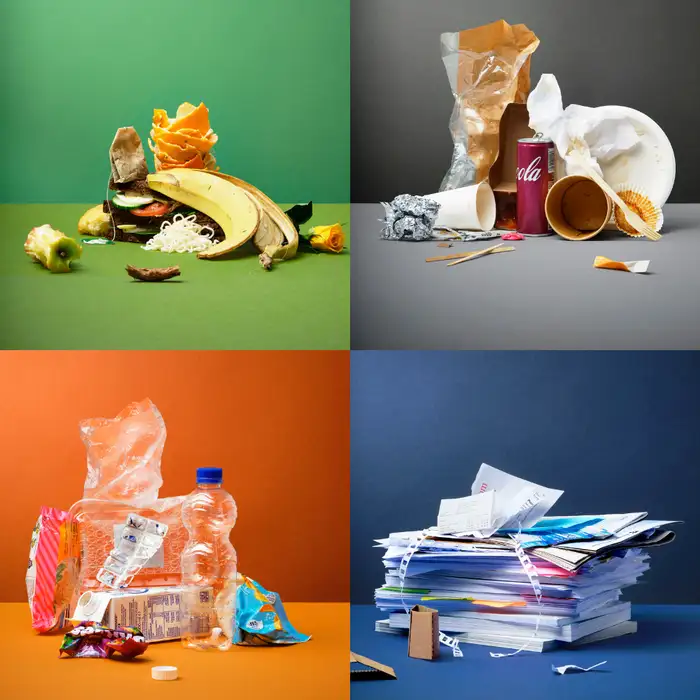
From January onwards, disposable cups and plates can go in the 'Residual waste & Cans'. Metal cans will no longer go into the Plastic bin but into the ‘Residual waste & Cans’ bin. There is a new 'Plastic & Drink cartons' bin in which all plastic bottles and other drink cartons should be disposed. Please note that all PET bottles and metal cans include a small deposit that can be refunded when returning the packaging to a supermarket.
In short, waste bins at the Academic Building will be divided as followed:
- Organic (as before)
- Residual waste & Cans
- Plastic & Drink cartons
- Paper (as before)
To make it easier, we have depicted each waste category in accordance with the colour of the bin.
Why using the right bin is important
If everyone throws their waste in the right bin, we can recycle 96% of the waste. However, if, for example, a plastic package ends up in the Organic Waste bin, the entire bin may be rejected, and the waste cannot be recycled.
More about recyling
Looking for more ways to contribute to a sustainable future? Outside of the Academic Building, there are two main ways to make sure your waste enters a new cycle.
- Dispose household waste in the right container.
The municipality of Amsterdam offers a comprehensive guide on how to recycle your household waste. You can find it here. - Return PET bottles and metal (drink) cans to the supermarket.
When purchasing PET bottles and metal cans at the supermarket, you pay an extra deposit that you can get back upon returning the packaging. Find more information here.